Repositioning Cruises from Vancouver: Coastal, Hawaii and Japan Crossings
By the Repositioning Cruises editors 7 min read Updated October 2026
Crossing
From
Vancouver
To
California
Updated: Expanded in October 2026, with sailing counts from our finder data and facts re-checked on the cruise lines' own websites.
Worth knowing
- Our finder lists 52 one-way sailings from or to Vancouver between October 2026 and December 2027
- All 34 Pacific coast repositioning runs in our data start or end in Vancouver
- Princess has the most, followed by Holland America, Royal Caribbean and Norwegian
- US cabotage law is why one-way coastal and Hawaii cruises start in Canada
- You clear US customs at Canada Place before boarding a US-bound ship
- Visa-exempt non-US travelers need a Canadian eTA to fly in, not to arrive by ship
Ports of call
- What sails from Vancouver: our dataI
- Why Vancouver gets the one-way voyagesII
- The coastal runs to Los Angeles and San DiegoIII
- Hawaii and Japan: the longer optionsIV
- Repositioning cruises to Alaska that end in VancouverV
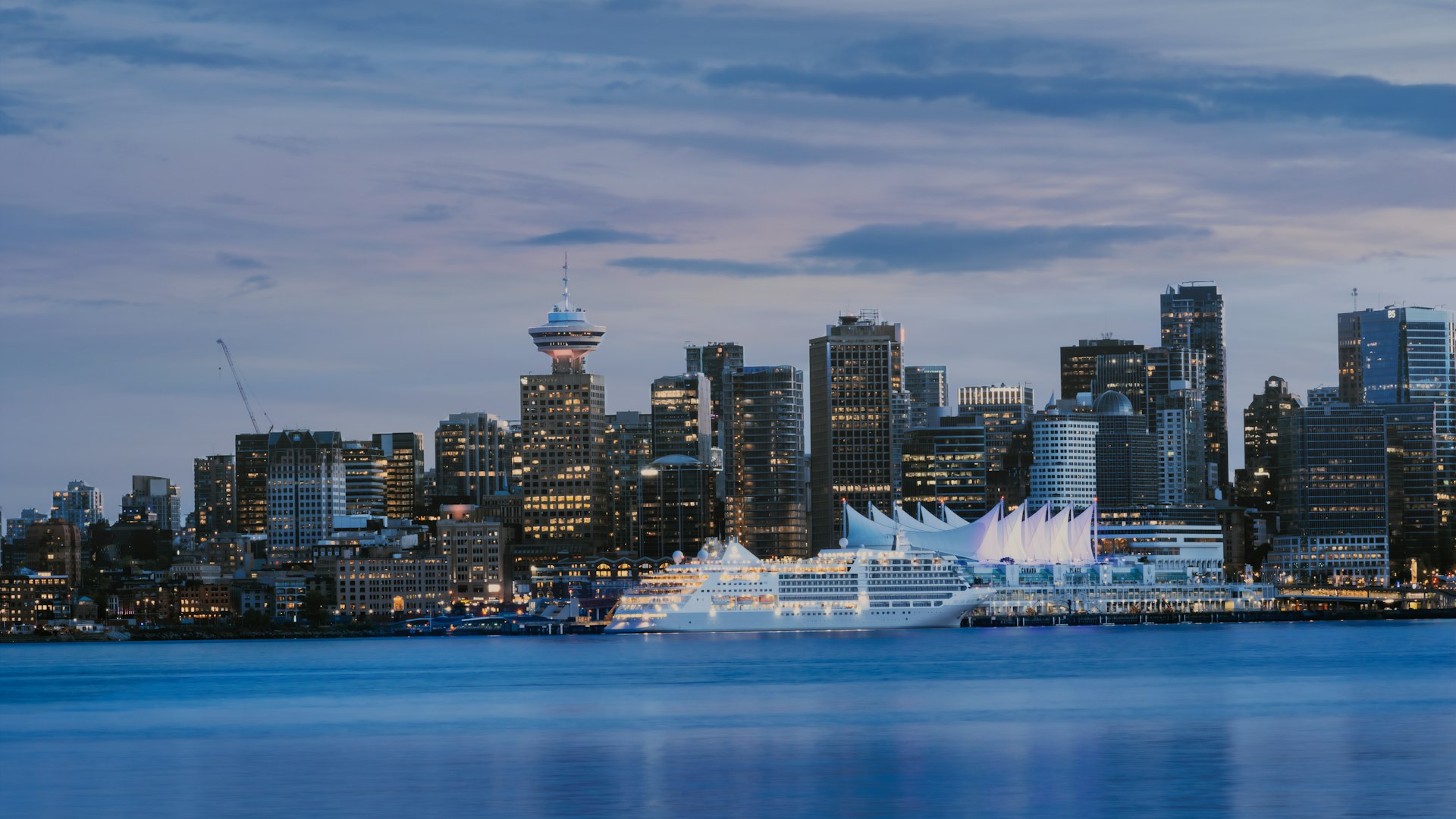
- Canada Place: the terminal and the borderVI
- Documents for a Canadian start or finishVII
- When to choose Seattle insteadVIII
Repositioning cruises from Vancouver follow the Alaska season. Ships arrive in April and May and leave in September and October, and those moves produce three kinds of one-way voyage: short coastal runs to or from Los Angeles and San Diego (3 to 7 nights), one-ways to and from Honolulu (8 to 11 nights), and North Pacific crossings to and from Tokyo (15 to 22 nights) that often include Alaska ports.
Vancouver is the busiest repositioning port on the West Coast, and the reason is a US law, not geography. It is also in Canada, which changes the paperwork. Both points are covered below, along with Canada Place and when Seattle is the better start.
What sails from Vancouver: our data
Of the 517 repositioning sailings in our repositioning cruise finder, each checked on the cruise line’s own website in late September 2026, 52 start or end in Vancouver between October 2026 and December 2027. Princess has 15 of them, Holland America 9, Royal Caribbean 6, Norwegian and Celebrity 5 each, Viking and Disney 4 each, and Oceania and Regent 2 each.
| Route type | Sailings | Main lines | Nights | Example |
|---|---|---|---|---|
| Coastal, to or from Los Angeles and San Diego | 34 | Princess, Holland America, Norwegian, Disney, Royal Caribbean | 3 to 7 | Crown Princess, Los Angeles to Vancouver, 7 nights via San Francisco, Astoria, Seattle and Victoria (April 2027) |
| Hawaii, to or from Honolulu | 7 | Celebrity, Royal Caribbean | 8 to 11 | Celebrity Solstice, Vancouver to Honolulu, 11 nights via Hilo and Kona (September 2027) |
| North Pacific, to or from Tokyo | 11 | Viking, Oceania, Regent, Princess, Norwegian, Holland America | 15 to 22 | Viking Orion, Tokyo to Vancouver, 22 nights via Otaru, Homer, Valdez and Ketchikan (May 2027) |
The calendar is concentrated: 27 of the 52 sail in April and May 2027 and 22 in September and October 2027. Outside those weeks there is almost nothing: one Norwegian coastal run in October 2026, and Royal Caribbean’s Ovation of the Seas, which arrives from Los Angeles and leaves for Honolulu in November 2027.
Why Vancouver gets the one-way voyages
Every one of the 34 Pacific coast repositioning sailings in our data starts or ends in Vancouver. None runs Seattle to California. The reason is the Passenger Vessel Services Act, which stops a foreign-flagged ship from carrying a passenger one way between two US ports unless the voyage reaches a “distant foreign port”. The CBP guide to the law lists Canada, Mexico, Central America, Bermuda and most of the Caribbean as nearby, so a call at Victoria or Ensenada is not enough.
Start or end the voyage in Vancouver and the problem disappears, because one end is foreign. That is why:
- Coastal runs between California and the Pacific Northwest sail to or from Vancouver, sometimes with a call at Seattle that you cannot board or leave at.
- One-way Hawaii cruises from the mainland leave from Vancouver, not Seattle or Los Angeles. Our Hawaii repositioning guide covers those sailings in detail.
- One-way Alaska cruises between Vancouver and Seward or Whittier are possible, while the same trip from Seattle is not.
One trap is worth knowing. CBP’s guidance gives the example of passengers who sail San Francisco to Vancouver, get off with their luggage, then reboard on a new ticket and leave the ship at another US port: that is still a violation. So booking Los Angeles to Vancouver followed by Vancouver to Alaska on the same ship can be refused. Ask the line before you plan a back-to-back.
The coastal runs to Los Angeles and San Diego
These are the shortest and simplest repositioning cruises in North America. In our data 4-night runs are the most common (13 of 34), and many of them are nonstop, which makes them three or four sea days and nothing else. The 6 and 7 night versions add ports: Victoria on 14 sailings, San Francisco on 15, Astoria on 7, and on southbound runs sometimes Santa Barbara or Catalina Island.
- Northbound, April to mid-May: 18 sailings from Los Angeles or San Diego, as ships leave the Mexican Riviera and California for the Alaska season.
- Southbound, mid-September to mid-October: 16 sailings back to California.
Disney runs 4-night moves between San Diego and Vancouver in both directions. Holland America runs the most San Diego sailings, and Princess the most Los Angeles ones. For the Southern California end, see our guide to repositioning cruises from Los Angeles.
The Pacific coast in April and October can be gray, and the stretch off Oregon and Northern California can be lively, but these are short voyages close to land. They are the easiest way to find out whether you like sea days before committing to an ocean crossing.
Hawaii and Japan: the longer options
Honolulu. Celebrity (Solstice and Edge) and Royal Caribbean (Anthem and Ovation of the Seas) sail between Vancouver and Honolulu, 8 to 11 nights, usually with Hilo, Kona or a scenic pass of the Napali Coast. Southbound sailings leave from mid-September to early November, and northbound ones arrive in late April and early May.
Tokyo. Eleven crossings in our data, seven arriving in Vancouver from Tokyo or Yokohama in April and May 2027, and four leaving for Tokyo in September 2027. This is where the smaller and luxury lines show up: Viking (22 nights each way), Regent and Oceania (16 to 19 nights), plus Princess, Norwegian and Holland America (15 to 19 nights). The route follows the Aleutians and the Gulf of Alaska, and our guide to repositioning cruises to Japan and Asia explains the date line, the weather and the clocks.
Repositioning cruises to Alaska that end in Vancouver
The spring Japan crossings are the real answer to the search for a repositioning cruise to Alaska. Coral Princess, Norwegian Jade, Holland America’s Westerdam, Oceania Riviera, Regent’s Seven Seas Explorer, and Viking Orion and Viking Venus all sail Tokyo to Vancouver in late April and May 2027, calling at Alaska ports such as Kodiak, Homer, Valdez, Whittier, Sitka, Juneau and Ketchikan before finishing in Canada. You see Alaska at the very start of the season, with snow on the mountains and quiet ports.
The coastal runs from California and the Hawaii sailings also end in Vancouver in spring, but they do not stop in Alaska. The ship goes to Alaska on its next cruise.
Canada Place: the terminal and the border
Vancouver’s cruise ships use Canada Place, on the downtown waterfront. The Vancouver Fraser Port Authority sets out how it works:
- Boarding a US-bound ship: after security screening, you clear US Customs and Border Protection inside the terminal, as the final step before boarding.
- Leaving a ship in Vancouver: you collect your bags and clear Canadian customs with the Canada Border Services Agency, using an E311 declaration card.
- Baggage: check-in usually opens around 10 a.m. on sailing day. Keep passports and medication with you.
Getting there is easy. The terminal sits next to Waterfront Station, where the SkyTrain Canada Line runs directly to Vancouver International Airport, and the port lists a flat taxi fare between Canada Place and the airport (CAD $42 at the time of writing). Long-term parking is in the Canada Place parkade, and ride-hail drivers can drop off on level P2 but cannot pick up at the terminal. Full details are on the port’s directions page.
Documents for a Canadian start or finish
US citizens. Canada does not require an eTA from US citizens, but you need proper identification. A passport card covers land and sea crossings, not international flights, and most passengers fly into or out of Vancouver. The closed-loop exception that lets US citizens cruise on a birth certificate only applies to voyages that return to the US port they left from. Bring a passport book.
Everyone else. According to the Government of Canada, visa-exempt foreign nationals need an eTA to fly to or transit through a Canadian airport, but not when arriving by ship. A British or Australian passenger who sails into Vancouver from Los Angeles and flies home from there needs no eTA for the arrival but will be leaving by air, and anyone who flies into Vancouver to board does need one. The port also asks international visitors to have an eTA or a US ESTA, as applicable, before arriving at the terminal. US lawful permanent residents are exempt from the eTA but need their green card and passport.
When to choose Seattle instead
Seattle shares the Alaska fleet but sells a different set of repositioning cruises. If you want a Panama Canal transit to Florida or the Gulf, or a long voyage to Australia, with a US start and no border crossing on the way to the ship, Seattle is the place to look: our Seattle repositioning guide lists its 14 sailings. For a short coastal trip, a Hawaii one-way or the widest choice of Japan crossings, Vancouver wins clearly.
If you are flying in from the US for a fall departure, plan to arrive the day before. Canada Place handles several ships on peak days in September, and a missed connection means a missed ship.
From the finder
Upcoming sailings
51 one-way sailings that match this guide, checked on the cruise lines' own websites on September 29, 2026. Fares change daily, so follow the link to see today's price.
San Diego → Vancouver
Koningsdam
Holland America Line
San Diego → Vancouver
Eurodam
Holland America Line
San Diego → Vancouver
Zaandam
Holland America Line
Los Angeles → Vancouver
Norwegian Encore
Norwegian Cruise Line
Los Angeles → Vancouver
Crown Princess
Princess Cruises
Los Angeles → Vancouver
Royal Princess
Princess Cruises
Honolulu → Vancouver
Celebrity Solstice
Celebrity Cruises
Tokyo → Vancouver
Coral Princess
Princess Cruises
No sailings match these filters. Try a wider month or any cruise line.
Questions before booking
What are the repositioning cruises to Alaska from Vancouver?
The spring crossings from Japan are the ones with Alaska ports. In April and May 2027, seven ships sail Tokyo to Vancouver in 15 to 22 nights, calling at places like Kodiak, Homer, Valdez, Juneau and Ketchikan. The shorter spring runs from Los Angeles, San Diego and Honolulu end in Vancouver without stopping in Alaska, because the ship starts its Alaska cruises from there.
How long is a Vancouver to Los Angeles repositioning cruise?
Usually 4 to 7 nights. In our finder, 4-night runs are the most common, often nonstop, and 7-night versions add San Francisco, Santa Barbara, Catalina Island or San Diego. Southbound runs leave Vancouver in mid-September to mid-October, and northbound runs from California arrive between early April and mid-May.
Do Americans need a passport for a Vancouver repositioning cruise?
In practice, yes. A passport card works for land and sea crossings, but it is not valid for international air travel, and most people fly into or out of Vancouver. The closed-loop birth certificate exception does not apply either, because the cruise does not return to the US port it left from. Bring a passport book.
Can I book Los Angeles to Vancouver and then Vancouver to Alaska on the same ship?
Ask the cruise line before you book. CBP has ruled that leaving a ship in Vancouver and reboarding on a new ticket to a different US port can still violate the Passenger Vessel Services Act, and the line pays a fine per passenger. Lines usually block such back-to-back combinations or require a different start or end port.
Should I choose Vancouver or Seattle for a repositioning cruise?
Vancouver for short coastal runs, Hawaii one-ways and the widest choice of Japan crossings: 52 sailings in our finder. Seattle for long voyages that start in the US: Panama Canal runs to Florida and the Gulf, and crossings to Japan and Australia, 14 sailings in all. Seattle cannot sell one-way trips to California at all.
Further voyages
Routes & Ports
Transpacific Repositioning Cruises: 2026–2027 Schedule, Routes and Lines
Transpacific repositioning cruises take two routes. The North Pacific route links Vancouver, Seattle or Los Angeles with Tokyo in 13 to 22 nights, sailing west in September and east in April and May. The South Pacific route links Hawaii and the West Coast with Sydney or Brisbane in 15 to 50 nights, south in September to November and north in March and April.
Routes & Ports
Australia Repositioning Cruises: To and From Sydney, Brisbane and Perth
Australia repositioning cruises move ships in for the southern summer, mostly arriving in Sydney between September and early December, and out again between February and April. They come and go two ways: from Singapore, Bali or Hong Kong in 12 to 32 nights, or across the Pacific from Honolulu, Los Angeles and Seattle in 15 to 50 nights. Sydney is the start or end of most of them.
Routes & Ports
Repositioning Cruises to Japan and Asia: The North Pacific Crossing
Repositioning cruises to Japan leave Seattle or Vancouver in September and October, when ships finish the Alaska season, and follow the northern Pacific past Alaska and the Aleutian Islands to Hokkaido and Tokyo in about 14 to 16 nights. In April and May ships make the reverse trip. Expect four to five sea days in a row, cool weather, and a lost calendar day at the international date line.