Transpacific Cruise Weather: Are Pacific Crossings Rough in September, October and May?
By the Repositioning Cruises editors 8 min read Updated November 2026
Worth knowing
- The northern Alaska to Japan route is colder and rougher than the Hawaii route.
- North Pacific storms strengthen through fall; NOAA finds hurricane-force lows peak around December.
- Western Pacific typhoon formation peaks in August and September, per the Japan Meteorological Agency.
- The central Pacific hurricane season around Hawaii runs June 1 to November 30.
- South Pacific cyclone season runs November to April, peaking January to March.
- Spring crossings in April and May are usually calmer than fall ones on the northern route.
Ports of call
- The two transpacific routes and their weatherI
- Why the North Pacific route gets roughII
- Transpacific cruise weather in SeptemberIII
- Transpacific cruise weather in OctoberIV
- Transpacific cruise weather in April and MayV
- Typhoons, hurricanes and cyclones: what the ship doesVI
- Seasickness on a long Pacific crossingVII
- How to pick a calmer transpacific crossingVIII
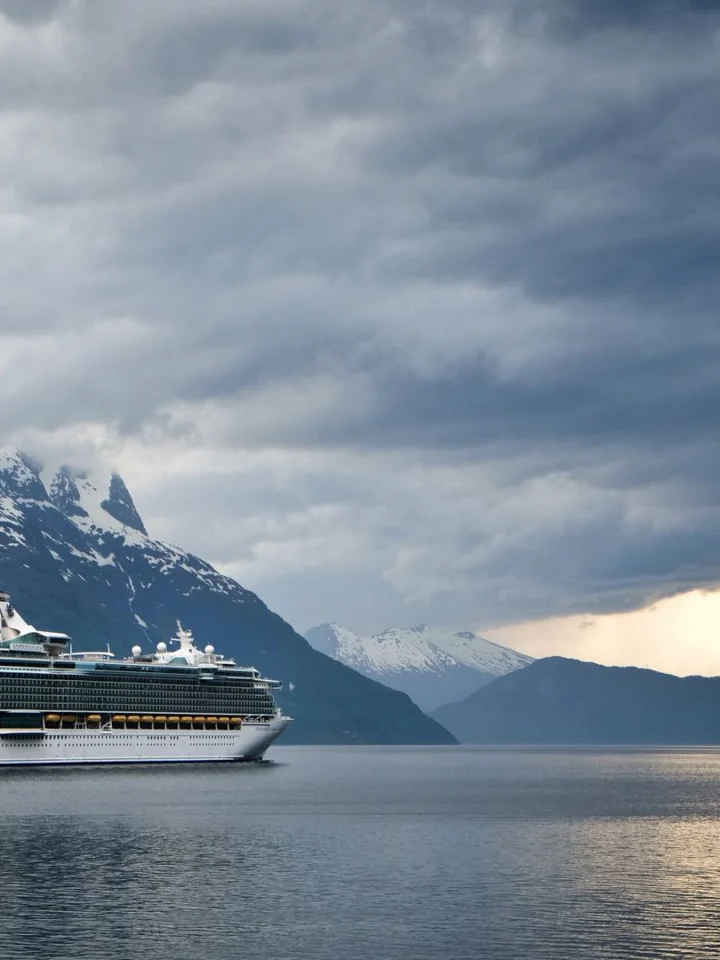
Transpacific cruise weather depends far more on which route you take than on the month. The northern route between Alaska and Japan runs close to the Aleutian Islands through one of the stormiest stretches of ocean in the world, and it is cool, often foggy and the likeliest to be rough. The southern routes through Hawaii and the South Pacific are warm, with trade-wind seas that are usually moderate. Both have tropical storm seasons to watch.
By month, September and the spring window of late April and May are usually the calmest times for a Pacific crossing. October brings more North Pacific swell and a lingering risk of typhoons near Japan. Most passengers on a large ship see a day or two of noticeable motion on a two-week crossing, not a voyage of constant heavy seas.
The two transpacific routes and their weather
Ships cross the Pacific on two broad routes, and the weather on each has very little in common. Our transpacific repositioning cruise schedule lists the individual sailings.
| Route | When ships sail | Air temperature at sea | Main weather risks | How rough it tends to be |
|---|---|---|---|---|
| Northern: Seattle or Vancouver via Alaska to Japan | September to October westbound, late April to May eastbound | Mostly 40s and 50s °F, warming near Japan | North Pacific storms, fog, typhoons near Japan in fall | The roughest transpacific route, especially in October |
| Hawaii: West Coast to Honolulu and on to Asia | Fall westbound, spring eastbound | 70s and 80s °F | Central Pacific hurricanes June to November | Usually moderate, with trade-wind swell |
| South Pacific: Hawaii to Australia or New Zealand | September to November southbound, April to May northbound | 70s and 80s °F, cooler near New Zealand | South Pacific cyclones November to April | Usually moderate; the Tasman Sea can be lively |
In our sailing data, built from the cruise lines’ own sites, the busiest departure months for transpacific voyages are April, September and October, in that order. That timing is deliberate: lines move ships between the Alaska season and the Asian or Australian summer in the shoulder months, before the North Pacific turns wintry and after the South Pacific cyclone season ends.
Why the North Pacific route gets rough
The great-circle route from Seattle or Vancouver to Tokyo bends north past Alaska because it’s shorter, and that takes ships through the storm track of the North Pacific. In fall and winter, low-pressure systems form off Japan and run northeast toward the Aleutians and the Bering Sea. Even when a ship misses the storm itself, those systems send long swells hundreds of miles across the route.
NOAA’s marine weather reviews track the strongest of these storms, the ones that reach hurricane-force winds of 64 knots or more without being tropical. A study cited in the NOAA North Pacific marine weather review found these hurricane-force lows were most frequent in December, and individual seasons often peak in January or February. October is already active, and activity falls off by April. For a cruise passenger, that means a September crossing usually sees the gentler end of the season, October more swell, and a spring crossing in late April or May catches the decline.
Temperatures stay cool either way. Expect the 40s and 50s °F on deck near Alaska and on the open crossing, and frequent fog and low cloud. Scenic cruising in Alaskan fjords can be spectacular one day and a gray wall the next. Our guide to repositioning cruises to Japan and Asia walks through the route port by port.
Transpacific cruise weather in September
September is the most popular month for westbound crossings to Japan, and for good reason. The North Pacific is cooling but the big winter storms haven’t set in, so most sea days are moderate. Fog is common near the Aleutians and off Hokkaido.
The catch is at the Japan end. Typhoon formation in the western North Pacific peaks in August and September: the Japan Meteorological Agency’s climatology gives 1991 to 2020 averages of 5.7 tropical cyclones forming in August and 5.0 in September, out of about 25 a year. Most don’t hit Japan, but a storm nearby can move or cancel a port call in Hokkaido or northern Honshu, or delay arrival in Yokohama.
On the Hawaii route, September is hot. Honolulu’s normal daily high is in the upper 80s °F, and the central Pacific hurricane season is still running. Hurricanes that threaten Hawaii are uncommon, but they do happen, and ships reroute around them.
Transpacific cruise weather in October
October is a transition month and the one most likely to bring a rough day on the northern route. North Pacific storms grow more frequent through the month, and a crossing late in October has a real chance of meeting a large swell. Air temperatures near Alaska drop into the 40s °F, and outer decks may be closed in strong wind.
Typhoons are less frequent than in September, with the JMA average down to 3.4 forming in October, but they still form and some recurve toward Japan. Ships sailing from Japan to Los Angeles via Hawaii in October, or from Los Angeles to Japan via the Hawaiian islands, take a more southerly path and usually have warmer, easier conditions.
For the South Pacific, October is a good month. Hawaii to Sydney or Brisbane sailings, covered in our guide to Australia repositioning cruises, arrive before the South Pacific cyclone season begins in November, and the islands are warm and mostly dry.
Transpacific cruise weather in April and May
Spring crossings run the other way: from Tokyo to Vancouver in late April and May, and from Sydney or Brisbane to Hawaii and the West Coast in April. These are usually the calmest transpacific voyages of the year.
- Japan to Alaska and Vancouver: the North Pacific storm season is winding down, and typhoons are rare in April and May (the JMA averages are 0.6 and 1.0 a month across the whole western Pacific). It is cold near Alaska, with snow still on the mountains, so pack for winter on deck.
- Australia to Hawaii: ships leave at the tail end of the South Pacific cyclone season. NIWA, New Zealand’s national weather research agency, describes the season as running usually from November to April, with peak activity in January to March, so an April departure carries a small, falling risk.
- Hawaii to the West Coast: the last leg is cooler and can bring a lively day or two as the ship moves north out of the trade winds toward California or British Columbia.
Typhoons, hurricanes and cyclones: what the ship does
The Pacific has three tropical storm seasons, and a long crossing can touch more than one.
| Region | Season | Peak | Which crossings it affects |
|---|---|---|---|
| Western North Pacific (typhoons) | All year | August to September | Fall crossings to and from Japan |
| Eastern North Pacific (hurricanes) | May 15 to November 30 | Late August | Los Angeles and Mexico departures |
| Central Pacific (hurricanes) | June 1 to November 30 | Late summer | Sailings via Hawaii |
| South Pacific (cyclones) | November to April | January to March | Hawaii to Australia and the return |
Season dates for the eastern Pacific come from the National Hurricane Center’s climatology. Cruise ships have forecasters’ data and a lot of ocean to work with, so the usual response to a tropical storm is to steer around it. That can mean a skipped or swapped port, a changed order of calls, or an arrival a few hours late, rather than a voyage through the storm. Cruise contracts allow lines to change itineraries for weather, and compensation for a missed port is usually limited to a refund of that port’s fees and taxes.
Seasickness on a long Pacific crossing
The CDC’s motion sickness guidance applies on the Pacific just as on any sea. Avoid the bow, keep your eyes on the horizon, get fresh air, and go easy on alcohol. For medication, the CDC lists antihistamines such as meclizine and dimenhydrinate and the prescription scopolamine patch, which works best started before symptoms. Talk to your doctor or pharmacist before the trip, especially if you take other medicines. Our article on whether transatlantic cruises are rough covers the same advice in more depth, and it applies here too.
A few points are specific to the Pacific. The long North Pacific swell has a slower, rolling motion that some people adapt to within a day and others find harder than a short, choppy sea. Five or six sea days in a row also mean there’s no port day to recover on. And the cold on the northern route shuts outdoor space, which is where many people feel best when the ship moves, so plan on a midship lounge with a view of the horizon.
How to pick a calmer transpacific crossing
- Choose the southern route if motion worries you. A crossing via Hawaii is longer but usually gentler than the northern great-circle route via the Aleutians.
- Prefer September or spring on the northern route. Early September westbound and late April or May eastbound avoid the heart of the North Pacific storm season.
- Book low and midship. A cabin on a lower deck near the middle of the ship moves least. Side doesn’t matter for motion.
- Pick a larger ship if you can. Bigger ships with stabilizers handle swell better, though no ship is immune to a big Pacific swell.
- Pack for the cold even on a “Pacific” cruise. The northern route needs a warm waterproof jacket, a hat and gloves. See the crossing packing list for layering for two climates.
If you’re torn between routes, the deciding question is whether you want Alaska and northern Japan or warm islands. The northern route trades comfort at sea for scenery and a shorter crossing; the Hawaii and South Pacific routes trade sea days for sunshine. Either way, plan your sea days around a few rough hours rather than expecting them never to come.
Questions before booking
Are transpacific cruises rough?
Some days can be, mainly on the northern route between Alaska and Japan, where fall storms near the Aleutians send long swells across the ocean. Most days on a large modern ship are manageable, and a rough stretch of a day or two is normal on a two-week crossing. The southern route through Hawaii and the South Pacific is usually gentler, with trade-wind seas rather than winter storms.
What is the weather like on a transpacific cruise in September?
On the northern route, expect air temperatures in the 40s and 50s °F near Alaska, fog, and mostly moderate seas, since the big North Pacific storms haven't fully arrived. Japan is warm and humid but it is still typhoon season, so a port call can change. On the Hawaii route, September is hot in the islands, with Honolulu highs in the upper 80s °F.
What is transpacific cruise weather like in October?
October is cooler and less settled than September on the northern route. Storm activity in the North Pacific picks up through the month, so a lively day or two is more likely. Typhoons are less frequent than in August and September but still form. On the southern route, Hawaii stays warm, and South Pacific islands are pleasant before their cyclone season starts in November.
Is May a good month for a transpacific cruise?
Usually, yes. Spring crossings from Japan to Vancouver in late April and May come after the worst of the North Pacific winter, and typhoons are rare that early. It is still cold near Alaska, with snow possible on the mountains. Northbound sailings from Australia to Hawaii in April leave as the South Pacific cyclone season is ending.
What is the best side or cabin location for a rough Pacific crossing?
Side matters less than height and position. Motion is smallest low in the ship and near the middle, and greatest at the bow and on high decks. The CDC's motion sickness guidance also recommends avoiding the front of a vessel. If you are prone to seasickness, book a midship cabin on a lower deck and plan your medication with a doctor before you go.
Further voyages

Planning & Costs
Transatlantic Cruise With Pets: Taking a Dog or Cat Across the Atlantic by Ship
Only one ship regularly takes pet dogs and cats across the Atlantic: Cunard's Queen Mary 2, which has 24 kennels on Deck 12 and carries pets on selected crossings between New York, Southampton and Hamburg. Pets stay in the kennels for the whole voyage, with set visiting hours and no vet aboard. Royal Caribbean, Norwegian, Celebrity, Princess and Carnival accept trained service dogs only, never pets or emotional support animals.
Planning & Costs
Solo Repositioning Cruises: Crossings With No Single Supplement and Cabins Built for One
To take a repositioning cruise with no single supplement, book a cabin designed for one. Norwegian has Studios on 10 ships and solo cabins across its fleet, Royal Caribbean has studio interiors on Quantum and Oasis class ships, Celebrity has single verandas on its four Edge-series ships, Cunard has singles on Queen Mary 2, Queen Elizabeth and Queen Victoria, Holland America on its three Pinnacle-class ships, and Princess on Sun Princess and Star Princess.

Planning & Costs
Transatlantic Cruise Packing List: Two Weeks, Two Climates, One Way
For a 12 to 16 night transatlantic cruise, pack for about eight days and plan to do laundry once. Bring layers for three climates: warm at the Florida end, cool and windy mid-ocean, and spring or autumn weather in Europe. Add one or two outfits for formal nights, a passport valid well beyond the trip, any travel authorization such as the UK ETA, medications in original containers, and seasickness remedies you have tried.