Westbound Transatlantic Repositioning Cruises: Europe to Florida in the Fall
By the Repositioning Cruises editors 7 min read Updated September 2026
Crossing
From
Europe
To
Florida
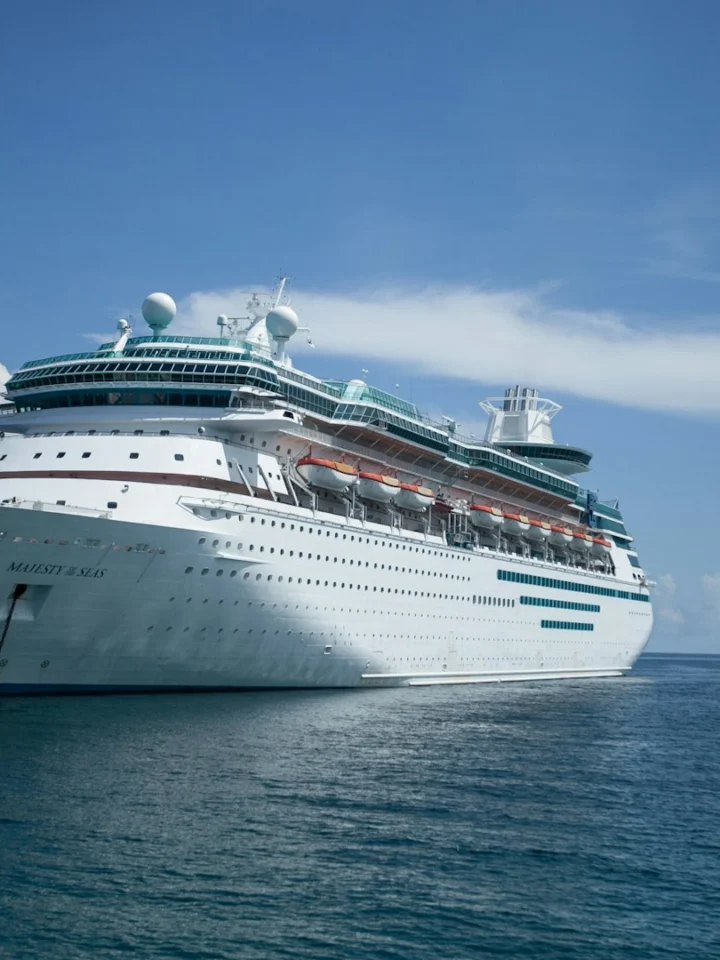
Worth knowing
- Most westbound crossings sail in October and November.
- Barcelona to Florida usually takes 13 to 16 nights.
- Clocks go back one hour on five or six nights: 25-hour days.
- Southern routes via the Canaries or Azores are usually calmer.
- Hurricane season lasts until November 30; ships route around storms.
- Westbound crossings are easier on jet lag than eastbound ones.
Ports of call
A westbound transatlantic repositioning cruise is the fall crossing from Europe back to the United States. Between late September and late November, dozens of ships leave the Mediterranean and Northern Europe for Florida, Texas, New York and Puerto Rico, where they spend the winter on Caribbean itineraries. The classic version is Barcelona to Miami, Fort Lauderdale or Port Canaveral in 13 to 16 nights, with a few Spanish and Atlantic island ports and then six to eight days at sea.
Two things set westbound apart from the spring direction. The clocks go back an hour on most nights of the crossing, so you get a run of 25-hour days and arrive in Florida adjusted to US time. And the weather has a different profile: late hurricane season on the southern route, and the start of the winter storm season on the northern one.
Westbound routes and how long they take
| Route | Typical length | Typical ports before the crossing |
|---|---|---|
| Barcelona to Miami, Fort Lauderdale or Port Canaveral | 13 to 16 nights | Palma, Valencia, Málaga or Cartagena, Gibraltar, Funchal or Tenerife |
| Rome (Civitavecchia) to Florida | 14 to 17 nights | Italian or French Riviera ports, then Spain |
| Lisbon or the Canary Islands to Florida | 10 to 12 nights | Madeira, Canaries; sometimes Bermuda |
| Southampton to Fort Lauderdale or Miami | 14 to 18 nights | Vigo, Lisbon, Azores, Bermuda |
| Southampton to New York | 7 nights (Queen Mary 2) to 14 nights | Direct, or via Ireland, Iceland or Canada |
| Barcelona to Galveston, Tampa or San Juan | 14 to 18 nights | As Barcelona to Florida, plus Caribbean ports |
The crossing itself, from the last European or Atlantic island port to the first American one, takes six to eight days on the southern routes. Barcelona to Miami is roughly 4,000 nautical miles in a straight line and longer by the routes ships actually take. Bermuda, when included, splits the crossing into two shorter runs of sea days.
For the full eastbound picture and the spring season, see repositioning cruises from Florida to Europe. For departures from Europe in general, see repositioning cruises to Europe, which covers the ports on both sides.
The 25-hour days
This is the best-kept feature of the westbound crossing. Barcelona is six hours ahead of Miami for most of the year, and the ship has to lose those hours somewhere. On most lines the captain sets the clocks back one hour at night, usually at 2 a.m. or at midnight, on five or six nights of the crossing. You get an extra hour of sleep or an extra hour of the evening, and nobody arrives in Florida jet-lagged.
A few details worth knowing:
- Daylight saving time shifts the count. Europe ends daylight saving time on the last Sunday of October (October 25 in 2026) and the US a week later (November 1 in 2026). For that week the gap between Spain and Florida is five hours, not six. A ship that leaves Barcelona before October 25 and reaches Florida after November 1 has seven hours to make up. Expect anywhere from five to seven 25-hour days, and check the daily program.
- Southampton to New York is normally a five-hour difference, which Queen Mary 2 covers with five 25-hour days on its seven-night crossing.
- Changes cluster on sea days. Ships avoid changing the clocks the night before a port, so the extra hours come during the open-ocean stretch.
The CDC’s jet lag guidance explains why this direction is easier: the body shifts its clock later more easily than earlier, adapting about 1.5 hours a day westbound against about 1 hour eastbound. One hour a night fits comfortably within that. Our guide to transatlantic cruise time changes covers both directions in detail.
Weather on a westbound crossing
The fall weather depends mainly on the route and the month.
Southern route (Canaries, Madeira, Azores to Florida). The National Hurricane Center’s climatology puts the Atlantic hurricane season at June 1 to November 30, with most activity between mid-August and mid-October. October storms tend to form in the western Caribbean, the Gulf and the western Atlantic, which is where westbound ships finish. A late September or early October crossing therefore carries a real chance of a rerouting or a missed port. By November activity has usually faded. Most days are warm, with air temperatures in the 70s °F around the Canaries and warmer toward Florida.
Northern route (Southampton to New York). Hurricanes are less of a factor, but the North Atlantic’s autumn storms start in October and grow stronger into November. Expect cool, windy days and a higher chance of a rough day or two. Queen Mary 2 was built for this route; most cruise ships handle it fine but feel it more.
Ships watch forecasts constantly and will change course, speed or ports to keep away from the worst weather. The practical effect for passengers is usually a swapped or cancelled port, not a dangerous day at sea. For a month-by-month breakdown and seasickness advice based on official guidance, see are transatlantic cruises rough.
What the crossing days are like
Westbound crossings have a rhythm that passengers who have done both directions often prefer. The ports come first, while everyone is still fresh from the flight, and the long run of sea days comes at the end, with an extra hour most nights. By the last few days people are rested rather than tired, and the arrival in Florida feels like a return rather than a landing.
On the ship, the crossing days fill with the usual repositioning program: lectures on the ports and the ocean, trivia, cooking demonstrations, wine and whisky tastings, classes, and more production shows than on a Caribbean week. The pool deck gets busier as the ship moves south and the air warms. The 25-hour days mean later nights for some and early morning walks for others, and many passengers find that the extra hour is the part of the trip they remember best.
Two things catch first-timers out. Internet on the open ocean can be slower than in port on some ships, so download books and shows before the crossing. And a two-week wardrobe tends to run out around day eight, so check before you sail whether your ship has self-service launderettes or only a paid laundry service. See what to do on sea days for how to plan them.
Which lines sail westbound in the fall
Almost every major line with a European summer program brings ships back in the fall. The ones with the most westbound crossings:
- Norwegian runs several each fall, often from Barcelona, Rome or Southampton to Port Canaveral, Miami or New York, with long port lists before the crossing.
- Royal Caribbean sails large ships from Barcelona and Southampton to Fort Lauderdale, Port Canaveral, Galveston and other home ports.
- MSC moves many ships to Miami, Port Canaveral, Galveston and New York, often with the lowest fares on the route.
- Celebrity, Princess and Holland America offer premium crossings, often with Bermuda or the Azores.
- Cunard, Virgin Voyages, Oceania, Regent, Silversea and Viking also sail westbound crossings, from 7 nights on Queen Mary 2 to three weeks on luxury ships.
For a side-by-side comparison of what sea days are like on each, see our guide to the best cruise lines for repositioning cruises.
What a westbound crossing costs
As of 2026, westbound transatlantic fares on mainstream lines typically run about $60 to $110 per person per night for an inside or ocean-view cabin, with MSC often at the bottom of that range and Celebrity or Holland America near the top. A 14- to 16-night crossing on a large ship regularly sells for roughly $1,000 to $1,700 per person in an inside cabin. Luxury lines are several times that.
Fall fares depend on three things:
- Timing within the season. Late October and November crossings compete with each other, and prices on the less popular dates can fall close to sailing.
- Ship size. Large ships have more cabins to fill and discount harder.
- Flights. Westbound, you fly out to Europe, which you can book months ahead at a normal fare. That is easier to plan than the eastbound problem of flying home from Europe. See cheap repositioning cruises for how to catch the lowest fares.
Planning a westbound transatlantic cruise
- Fly to Europe a day or two early. The outbound flight is overnight and eastward, so arriving the day before sailing at minimum gives you a buffer against delays and a night’s sleep.
- Book an afternoon flight home from Florida. Princess’s flight guidelines for port cities suggest domestic flights no earlier than 4 hours after the ship arrives in Fort Lauderdale and 5 hours in Miami, because everyone clears US immigration and customs on arrival. More in our guide to flights home after a repositioning cruise.
- Pack for two seasons. Autumn in Barcelona or Southampton, a cool mid-Atlantic, then Florida heat. Our transatlantic cruise packing list covers layers, formal nights and laundry.
- Check the Europe entry rules. Arriving in the Schengen area by air, you will go through the EU’s Entry/Exit System, which records fingerprints and a photo. Starting in Southampton, US citizens need a UK Electronic Travel Authorisation.
If you want the calmest version of the westbound crossing, pick a November sailing on the southern route from Barcelona or Lisbon to Florida, when hurricane activity has usually faded and the North Atlantic storms are well to the north.
From the finder
Upcoming sailings
94 one-way sailings that match this guide, checked on the cruise lines' own websites on September 29, 2026. Fares change daily, so follow the link to see today's price.
Barcelona → Miami
Celebrity Xcel
Celebrity Cruises
Southampton → New York
Queen Mary 2
Cunard
Piraeus (Athens) → Fort Lauderdale
Oosterdam
Holland America Line
Marseille → Port Canaveral
MSC Grandiosa
MSC Cruises
Barcelona → Fort Lauderdale
Legend of the Seas
Royal Caribbean
Civitavecchia (Rome) → Cape Liberty (Bayonne)
Odyssey of the Seas
Royal Caribbean
Barcelona → Miami
Seven Seas Mariner
Regent Seven Seas Cruises
Barcelona → Port Canaveral
Norwegian Escape
Norwegian Cruise Line
No sailings match these filters. Try a wider month or any cruise line.
Questions before booking
When do westbound transatlantic cruises sail?
Mostly from late September to late November, with the heaviest traffic in October and early November. That is when lines move ships from their European summer seasons back to Florida, Texas, New York and Puerto Rico for the Caribbean winter. A few sail in December, and Cunard's Queen Mary 2 crosses westbound on a schedule through much of the year.
How long is a transatlantic cruise from Barcelona to Miami?
Usually 13 to 16 nights. A typical itinerary spends three to five days calling at ports in Spain, Gibraltar, Madeira, the Canary Islands or the Azores, then six to eight days crossing the open Atlantic to Florida. Shorter versions from Lisbon or the Canaries cut a few days; versions that start in Rome, Venice or Athens add a few.
Is a transatlantic cruise in November rough?
It can be, depending on the route. Southern routes via the Canary Islands or Madeira toward Florida are usually moderate in November, with occasional swell from distant storms. The northern route between Southampton and New York is more exposed, and November gales are common there. Hurricane activity has usually faded by November, but the season officially lasts until November 30.
Is westbound or eastbound better for a transatlantic cruise?
Westbound is easier on sleep. The clocks go back an hour on several nights, so you gain time and arrive adjusted to US time. Eastbound, the clocks go forward and you lose an hour on several nights. Fall westbound crossings also end in Florida's warm season, while spring eastbound crossings end in Europe's spring, so choose based on where you want to finish.
Further voyages
Routes & Ports
Repositioning Cruises from Los Angeles: Coastal Runs, Hawaii and Beyond
Repositioning cruises from Los Angeles run north to Vancouver in April and May for the Alaska season (3 to 7 nights) and come back in September and October. Longer one-ways leave San Pedro for Tahiti, Sydney or Tokyo by way of Hawaii (17 to 50 nights), and Panama Canal sailings to Florida run through the winter. Princess runs most of them.
Routes & Ports
Repositioning Cruises from Seattle: Panama Canal, Japan and Australia
Repositioning cruises from Seattle are long voyages, not short coastal hops. In late September and early October, ships finishing the Alaska season leave for Florida, the Gulf or New York through the Panama Canal (16 to 22 nights), for Japan (13 to 15 nights) or for Australia (25 to 34 nights). In March and April the same routes run in reverse into Seattle.
Routes & Ports
Repositioning Cruises from New York and Boston: Europe, Florida and Queen Mary 2
Repositioning cruises from New York and Boston run at the edges of the New England and Canada season. In spring and early fall, ships sail from New York or Boston to Southampton, Barcelona or other European ports in 7 to 16 nights, often via Halifax, Iceland or the Azores. In late fall, ships move south to Florida. Cunard's Queen Mary 2 is different: it crosses New York to Southampton on a schedule in seven nights.