Regent Repositioning Cruises: Routes, Fares and What Is Included
By the Repositioning Cruises editors 7 min read Updated October 2026
Updated: Expanded in October 2026, with sailing counts from our finder data and facts re-checked on the cruise lines' own websites.
Worth knowing
- Our finder lists 54 Regent repositioning voyages, from 7 to 28 nights
- Most run 14 nights or longer; Asia-Pacific moves are the most common
- Drinks, specialty dining, gratuities, Wi-Fi and excursions are in every fare
- Since July 2024, flights come only with the Ultimate All-Inclusive fare
- Entry suites on a 14-night crossing start around $330 per person a night
- Ships carry about 500 to 820 guests and move more in ocean swell than mega-ships
Ports of call
Regent repositioning cruises are one-way voyages that move Regent Seven Seas’ small all-suite ships between their seasonal regions: the Mediterranean and northern Europe in summer, the Caribbean, South America, Asia and Australia in winter. Most run 14 to 16 nights. The fare includes drinks, specialty restaurants, gratuities, Wi-Fi and shore excursions, which changes the math on a crossing more than on any other itinerary, because you spend so much time aboard.
As of fall 2026, entry-level suites on a 14-night Regent crossing started at roughly $4,700 per person, about $330 a night, and the newest ship cost about twice that. That is several times the per-night fare of a mainstream crossing, but the comparison only makes sense once you add what the mainstream lines charge extra for. This page sets out the routes, what is included, what it costs and who it suits.
How Regent repositions its fleet
Regent sails seven ships, all suites: Seven Seas Navigator, Mariner, Voyager, Explorer, Splendor and Grandeur, plus the new Seven Seas Prestige, which joins in December 2026. They carry from about 500 guests on Navigator to about 820 on Prestige, with roughly two crew members for every three guests or better. Regent sells its crossings under the label Transoceanic Crossings, which is worth knowing when you search its site.
Because the ships are small and the line goes almost everywhere, Regent’s repositioning is broader than most. It moves ships across the Atlantic like everyone else, but also through the Panama Canal, between Asia and Australia, through the Suez Canal and around Africa. Of the 517 upcoming sailings in our repositioning cruise finder, 54 are Regent’s, checked on Regent’s own site in late September 2026. That is as many as Royal Caribbean, with a fleet a fraction of the size.
Regent’s repositioning routes in our data
| Route type | Voyages | Typical length | Examples |
|---|---|---|---|
| Within Asia and Australia | 16 | 7 to 21 nights | Bali to Sydney, Tokyo to Hong Kong, Sydney to Singapore |
| Transatlantic (both directions) | 11 | 14 to 16 nights | Barcelona to Miami, Miami to Lisbon, Southampton to Montreal |
| Panama Canal | 9 | 11 to 16 nights | Miami to Los Angeles, Lima to Miami, Miami to San Francisco |
| Around Africa and other long legs | 9 | 14 to 28 nights | Lisbon to Cape Town, Cape Town to Singapore, Miami to New York |
| Suez and the Middle East | 5 | 17 to 23 nights | Mumbai to Rome, Singapore to Abu Dhabi, Athens to Doha |
| Transpacific | 2 | 19 nights | Tokyo to Vancouver in May, Vancouver to Tokyo in September |
| South America and South Pacific | 2 | 18 to 28 nights | Miami to Rio de Janeiro, Panama City to Tahiti |
Across all 54, the median is 15 nights and 45 voyages run 14 nights or longer. The busiest months are January to April 2027, when ships come out of the Caribbean and Asia for the European summer, and October to December 2027, when they go back.
A few routes stand out because few other lines sail them. Seven Seas Explorer’s 19-night Tokyo to Vancouver voyage in May 2027, and the reverse in September, follow the North Pacific route covered in our guide to repositioning cruises to Japan and Asia. Seven Seas Mariner’s 18-night Miami to Rio de Janeiro voyage in January 2027 is one of the more comfortable ways into South America repositioning. And the canal voyages, which Regent runs in both directions through the winter, are covered in our Panama Canal repositioning guide.
What the fare includes, and what changed in 2024
Every Regent fare includes unlimited shore excursions, specialty dining, premium drinks including wine and spirits, gratuities, Wi-Fi, valet laundry and access to parts of the spa. That is the core of Regent’s pitch, and on a crossing it matters because you use the bars, restaurants and laundry every day.
Flights are a different story, and older guides get this wrong. Since July 1, 2024, Regent has sold two fare types, according to the announcement from Regent’s parent company:
- All-Inclusive: everything aboard plus the excursions, but you arrange your own flights.
- Ultimate All-Inclusive: adds round-trip flights in the class you choose, from economy to first, coach transfers between airport and ship, and a credit of up to $500 per suite for a private chauffeur.
On a one-way crossing, the air question decides more than usual. If you take the Ultimate fare, check that the flight covers your home airport at both ends. If you take the cheaper fare, price the one-way flight home before you commit, because it is the one cost Regent no longer absorbs.
The excursions are worth less on a crossing than on a port-heavy cruise, but not nothing. Even the 14-night Barcelona to Miami voyage on Seven Seas Voyager in December 2027 lists up to 59 included excursions, because it calls at several Spanish and Atlantic island ports before the long run west.
What a Regent crossing costs
Regent prices per person, by suite category, and the spread between ships is wide. As of early October 2026, the line’s site showed:
- Seven Seas Voyager, Barcelona to Miami, December 5, 2027, 14 nights: from about $4,675 per person in a Deluxe Veranda Suite, roughly $334 a night. The two lowest categories were already on a wait list.
- Seven Seas Prestige, New York to Barcelona, April 27, 2027, 14 nights: from roughly twice that, reflecting a brand-new ship.
The fairest comparison is against a mainstream crossing with the extras added back in. For two weeks, the add-ons look like this:
| Item, per person, 14 nights | Mainstream line | Regent |
|---|---|---|
| Gratuities | About $240 to $260 at $17 to $18.50 a day | Included |
| Drinks package | About $980 to $1,680 at $70 to $120 a day | Included |
| Wi-Fi | Extra, varies by line | Included |
| Specialty dining | Extra, per meal or package | Included |
| Excursions in the few ports | Extra | Included |
| Flights | Extra | Included only on Ultimate fare |
A mainstream balcony fare plus a drinks package, gratuities and Wi-Fi can reach $250 to $300 a night on a crossing. At that point an older Regent ship at around $330 is not far off. A light drinker in an inside cabin on a budget line will still pay a fraction of the Regent price, and should.
Small ships on a big ocean
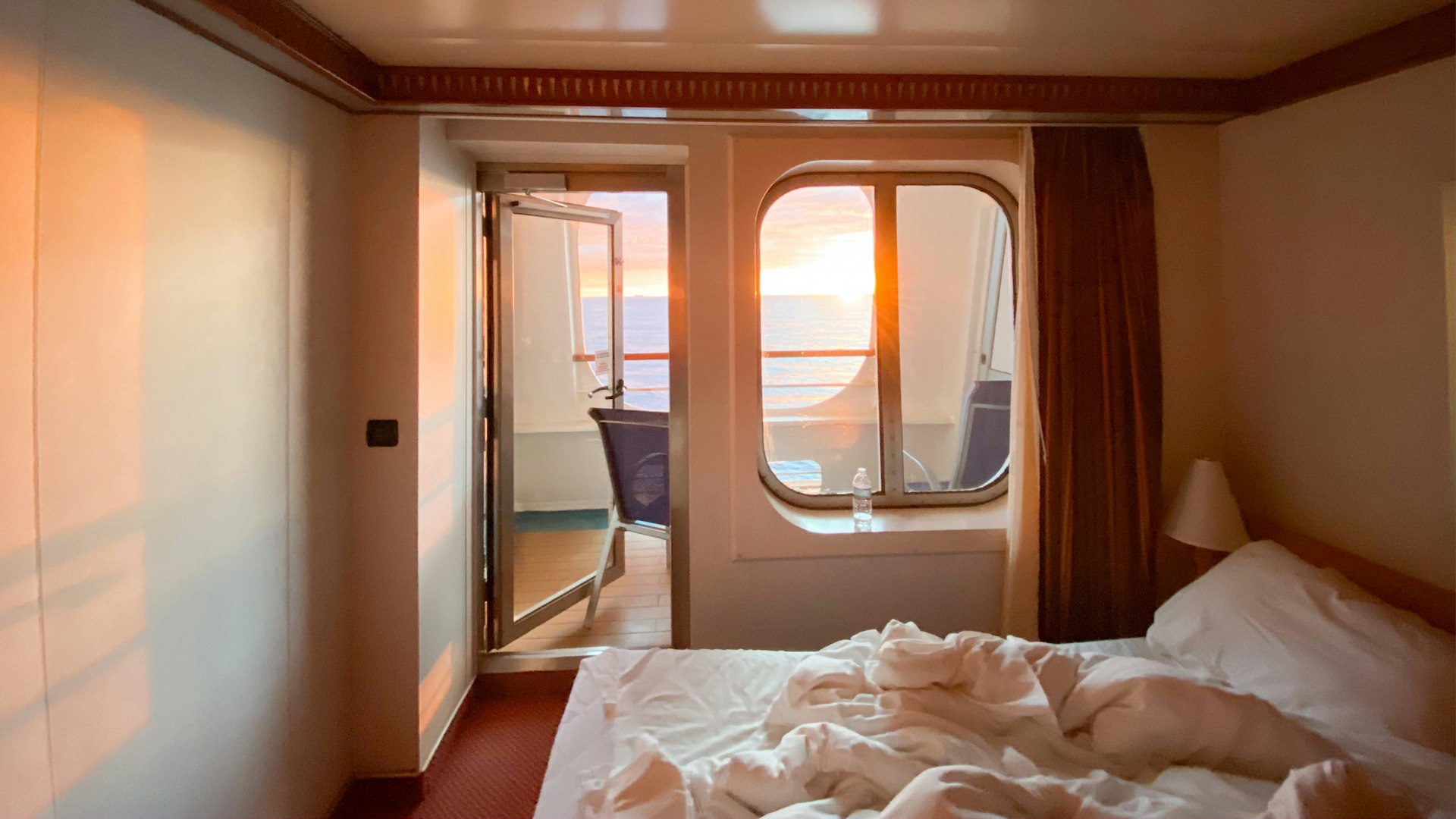
Every Regent suite is a suite, and nearly all have private verandas. On day nine of a crossing, a balcony you can sit on with a book is a different proposition from one you step onto twice between ports. Public rooms are calm, there are no queues to speak of, and with a crew of 455 for 700 guests on Seven Seas Voyager, for example, the service has room to be attentive.
Size cuts the other way in weather. A ship of 500 to 800 guests moves more in a long Atlantic or Pacific swell than a 150,000-ton mainstream ship, and passengers who are sensitive to motion notice it. Choose a midship suite on a lower deck if you are worried, prefer a southern spring or November route over a late-season northern one, and talk to a doctor about prevention before you go.
Seven Seas Prestige deserves a note of its own. Its maiden voyage, according to the line’s parent company, is a 14-night crossing from Barcelona to Miami departing December 13, 2026, and its first transatlantic seasons sold strongly at launch. Expect less discounting on Prestige than on the older ships for some time.
Which Regent ship makes which moves
Each ship tends to stay in its part of the world, so the ship you want largely decides the route. In our data:
| Ship | Voyages in our data | Main repositioning pattern |
|---|---|---|
| Seven Seas Navigator | 12 | Asia and Australia, plus long legs around Africa; the smallest ship, about 500 guests |
| Seven Seas Splendor | 11 | A long chain from Miami through the canal to Tahiti, Sydney, Singapore, the Gulf and Rome, then the Atlantic |
| Seven Seas Grandeur | 8 | Panama Canal through the winter, Atlantic in spring and late summer |
| Seven Seas Mariner | 8 | Atlantic, South America, then the Middle East and Asia in late 2027 |
| Seven Seas Explorer | 7 | Asia, plus the two North Pacific crossings to and from Vancouver |
| Seven Seas Prestige | 5 | Panama Canal and Atlantic in its first full year |
| Seven Seas Voyager | 3 | Indian Ocean and Suez in spring 2027, Atlantic in December 2027 |
If you want an Atlantic crossing specifically, Grandeur, Mariner, Splendor and Prestige cover most of them. You can filter all of them in our finder and sort by month.
Who a Regent crossing suits
A Regent crossing suits someone who has already sailed a few sea days and knows they like them, who drinks wine with dinner and would otherwise buy a package, and who values not signing a bar bill for two weeks. It suits couples who want a quiet ship and solo travelers who like a small enough ship to recognize faces by the end of the first week.
It suits families poorly, and it is a costly way to find out you are restless at sea. If you have never done a crossing, start with a mainstream line and read our honest answer on whether repositioning cruises are worth it. If you are choosing between luxury lines, Viking’s repositioning cruises are the most common alternative: adults only, slightly lower fares, but with less included.
For the best price, watch the older ships on the busiest routes. Mariner, Voyager and Navigator cross the Atlantic and the canal every year, and those are the voyages where Regent’s promotions, such as shipboard credit or past-guest savings, most often appear. On the same 14 nights, the gap between an older ship and Prestige can be several thousand dollars per person.
From the finder
Upcoming sailings
54 one-way sailings that match this guide, checked on the cruise lines' own websites on September 29, 2026. Fares change daily, so follow the link to see today's price.
Barcelona → Miami
Seven Seas Mariner
Regent Seven Seas Cruises
Montreal → Miami
Seven Seas Splendor
Regent Seven Seas Cruises
Tokyo → Hong Kong
Seven Seas Explorer
Regent Seven Seas Cruises
Rome (Civitavecchia) → Miami
Seven Seas Grandeur
Regent Seven Seas Cruises
Bali (Benoa) → Sydney
Seven Seas Explorer
Regent Seven Seas Cruises
Miami → Los Angeles
Seven Seas Grandeur
Regent Seven Seas Cruises
Miami → Rio de Janeiro
Seven Seas Mariner
Regent Seven Seas Cruises
Miami → Panama City
Seven Seas Splendor
Regent Seven Seas Cruises
No sailings match these filters. Try a wider month or any cruise line.
Questions before booking
Does Regent do transatlantic cruises?
Yes, in both directions every spring and fall. Our data shows 11 Regent transatlantic voyages between October 2026 and December 2027, mostly 14 to 16 nights, on routes such as Barcelona to Miami, Miami to Lisbon, New York to Barcelona and Southampton to Montreal. Regent markets them as Transoceanic Crossings.
Are flights included on Regent repositioning cruises?
Only on the Ultimate All-Inclusive fare. Since July 2024, Regent has sold two fare types: All-Inclusive, which covers everything aboard plus excursions but not flights, and Ultimate All-Inclusive, which adds round-trip flights in your chosen class, airport transfers and a chauffeur credit. On a one-way crossing, check that the air covers your actual return city.
How much does a Regent transatlantic cruise cost?
As of fall 2026, Regent listed a 14-night Barcelona to Miami crossing on Seven Seas Voyager in December 2027 from about $4,675 per person, roughly $334 a night, in an entry-level veranda suite. Crossings on the new Seven Seas Prestige were listed at roughly twice that. Higher suite categories cost much more.
Are Regent ships stable enough for an ocean crossing?
They cross oceans routinely and are built for it, but a ship of 500 to 800 guests moves more in a long swell than a 150,000-ton mainstream ship. Passengers prone to motion sickness should choose a midship suite on a lower deck, pick a southern spring or fall route, and talk to a doctor about prevention before sailing.
Is a Regent crossing worth it compared with a mainstream line?
It can be closer than the headline fares suggest if you would otherwise buy a drinks package, specialty dinners, Wi-Fi and gratuities for two weeks. It is rarely worth it for light drinkers who eat in the main dining room, or for anyone who has not yet found out whether they enjoy long runs of sea days.
Further voyages
Cruise Lines
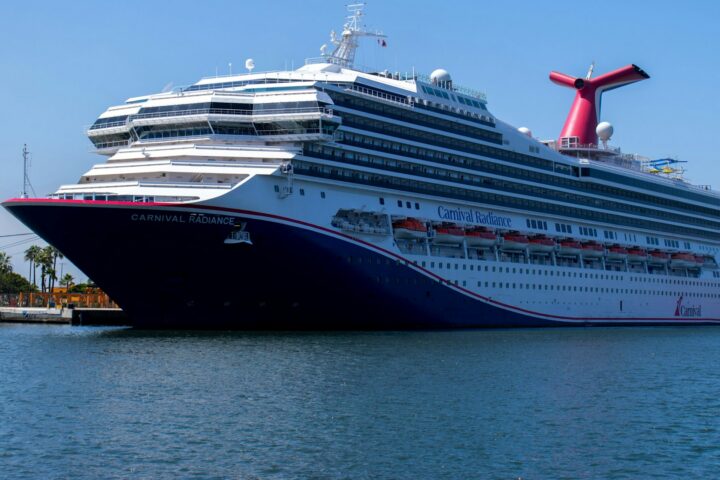
Carnival Repositioning Cruises: Gulf Coast Canal Runs, 2027 Europe Crossings and Australia
Carnival repositioning cruises are a small, unusual program: our finder lists 26 one-way Carnival sailings from October 2026 to December 2027, checked on carnival.com. The standouts are 16-night Panama Canal runs between Seattle and Gulf Coast ports such as Mobile and Galveston, five transatlantic crossings tied to a 2027 Europe season, South America on Carnival Firenze, and moves around Australia and Asia.
Cruise Lines
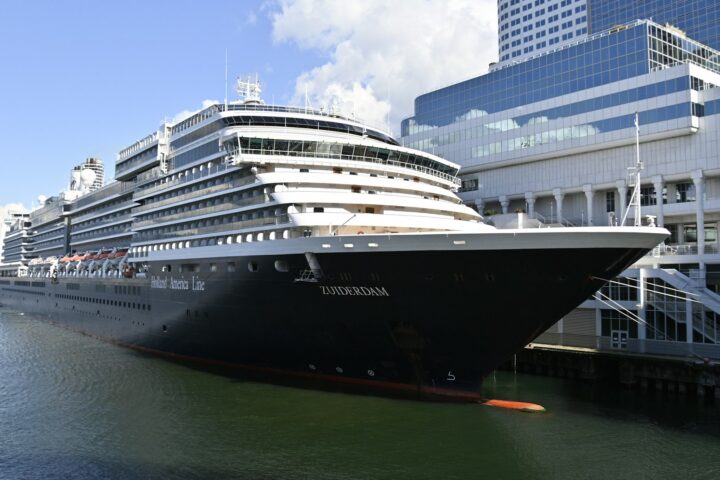
Holland America Repositioning Cruises: Grand Voyage Segments, Pacific Coast Runs and Crossings
Holland America repositioning cruises run in every season: our finder lists 45 one-way sailings from October 2026 to December 2027, checked on hollandamerica.com. They range from 4-night Vancouver to San Diego runs to 35-night Grand World Voyage segments. The typical voyage is 15 nights, and San Diego and Fort Lauderdale are the main ports, with crossings to Rotterdam, Amsterdam and Barcelona each spring and fall.
Cruise Lines
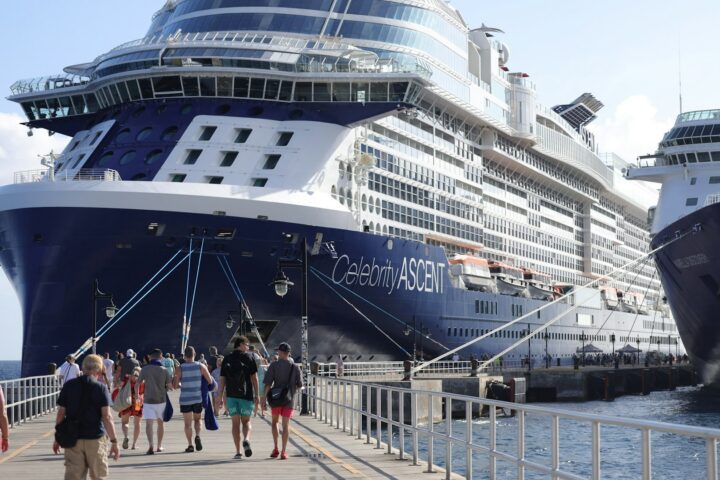
Celebrity Repositioning Cruises 2026-2027: Edge-Class Crossings, Fares and What’s Included
Celebrity repositioning cruises run mainly between Europe and Florida: our finder lists 37 one-way Celebrity sailings from October 2026 to December 2027, checked on celebritycruises.com, and 16 are 13- to 16-night transatlantic crossings. Edge-class ships handle 12 of the 37, and their crossings cost about $110 to $133 a night in October 2026 fares, against $61 to $93 on the older ships.